wondertone

37.77° N · 122.42° W · 6 tours · 105 min

San Francisco

City of hills and horizons.

All places

Six walks across a city that keeps rebuilding itself: out to the foot of the Golden Gate’s South Tower, down the brick switchbacks of Lombard Street, around the lagoon at the Palace of Fine Arts, and through Golden Gate Park, which was nothing but sand dunes once.

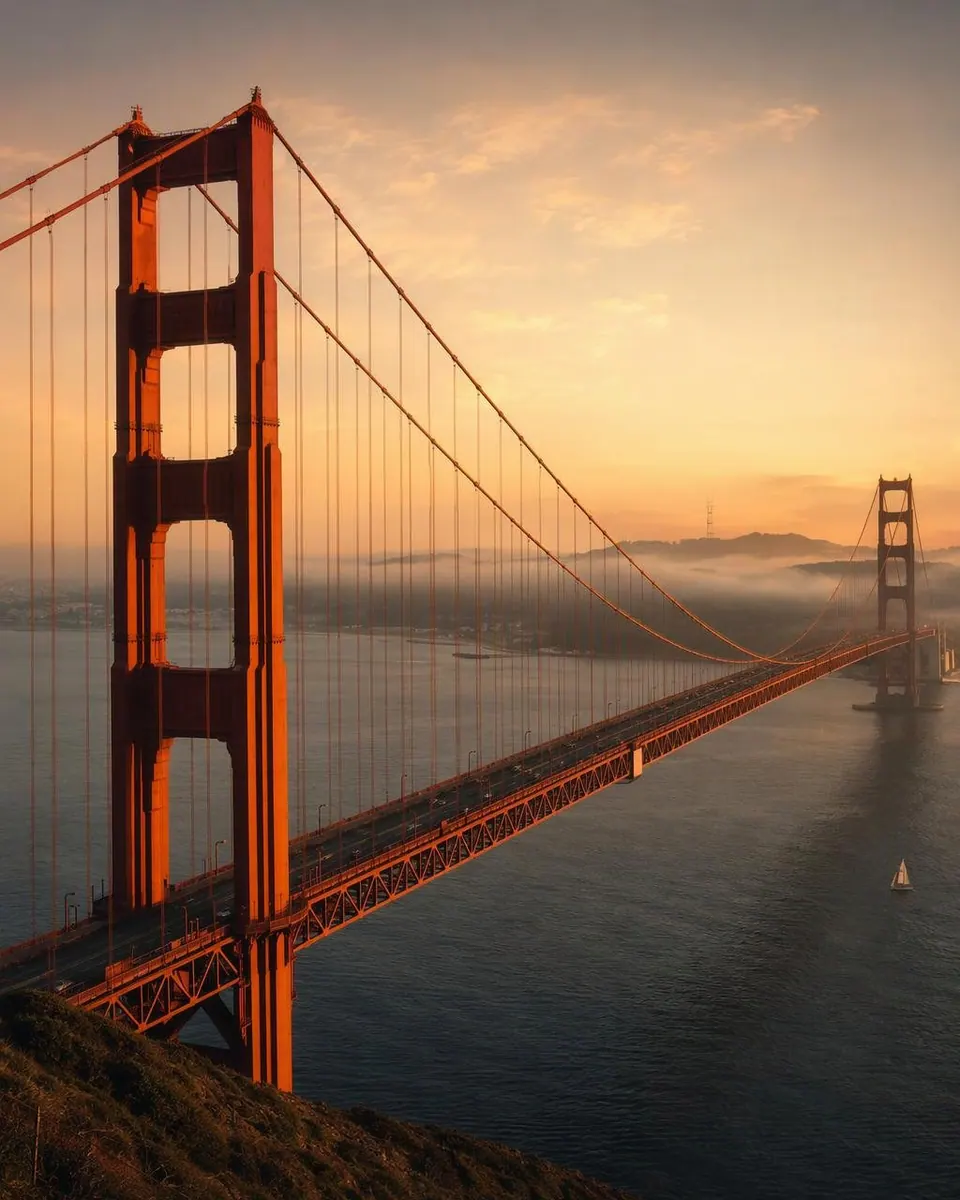
Golden Gate Bridge's orange South Tower and cables at sunset, with fog over the bay, a small sailboat and a grassy hillside below.
Hear a moment · 0:14

Landmark · 8 stops · 21 min · 430 m · Narrated in English

Golden Gate Bridge: Out to the South Tower

From the Round House plaza to the foot of the South Tower

Stop 1 · Welcome Center Plaza and the Round House

And the party? It was held right inside. A photo shows the bridge district president, Warren Shannon, blowing out a single candle on the cake. One candle for one very large bridge.

The stops

  1. 1Welcome Center Plaza and the Round House
  2. 2Joseph Strauss Statue
  3. 3The Cable Cross-Section
  4. 4Fog and Wind
  5. 5Onto the East Sidewalk
  6. 6View Down to Fort Point
  7. 7International Orange and the Paint Crew
  8. 8The South Tower Up Close

At the first stop, look for The round, glass-walled Round House café, the Welcome Center building beside it, and the nearer orange tower rising over the plaza.

Open in the app
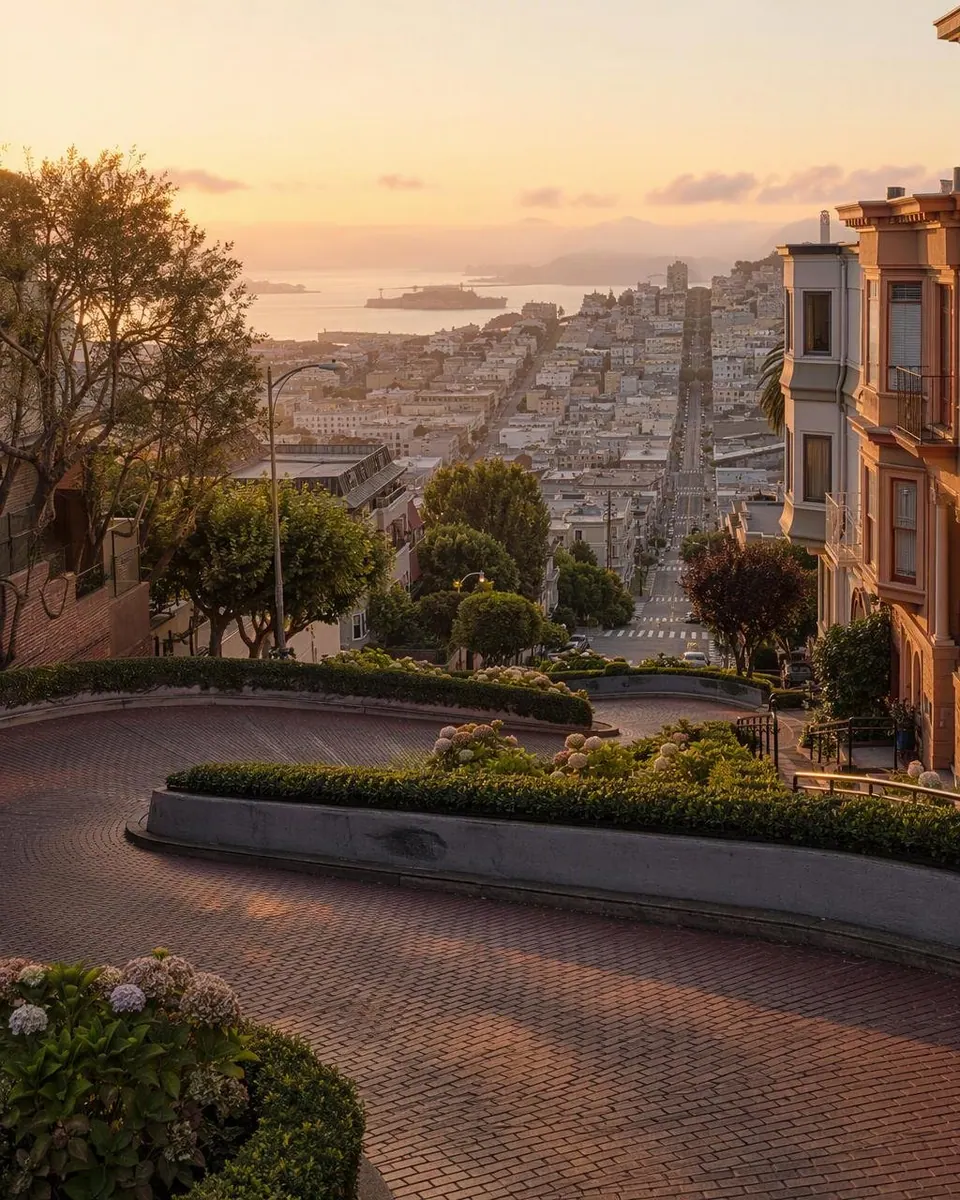
Lombard Street's brick curves at sunrise, with hydrangeas and hedges in front and the city sloping down toward the bay and Alcatraz.
Hear a moment · 0:30

Walk · 5 stops · 14 min · 150 m · Narrated in English

Lombard Street: Eight Turns Down

One brick block, eight hairpin bends, and the story of how a hill too steep for wheels became a street everyone wants to drive.

Stop 1 · Top of the Hill on Hyde Street

Maya Here's a question to carry with you. How does a hill too steep for wheels become a street everyone wants to drive? Oliver That's the story of this walk. I'm Oliver, and I'll be guiding you down. Maya And I'm Maya. First time here, so I'm asking the questions with you. Oliver Welcome to the top of Russian Hill. Over the next few stops, we'll walk down one single block. It's paved in red brick, and it folds itself into eight hairpin bends. Maya Eight, in one block?

The stops

  1. 1Top of the Hill on Hyde Street
  2. 2The Crooked Block Begins
  3. 3Halfway Down the Stairs
  4. 4Lower Bends and Red Bricks
  5. 5Looking Back from Leavenworth

At the first stop, look for The cable car tracks running down Hyde Street, and on a clear day Alcatraz out in the bay to the north.

Open in the app
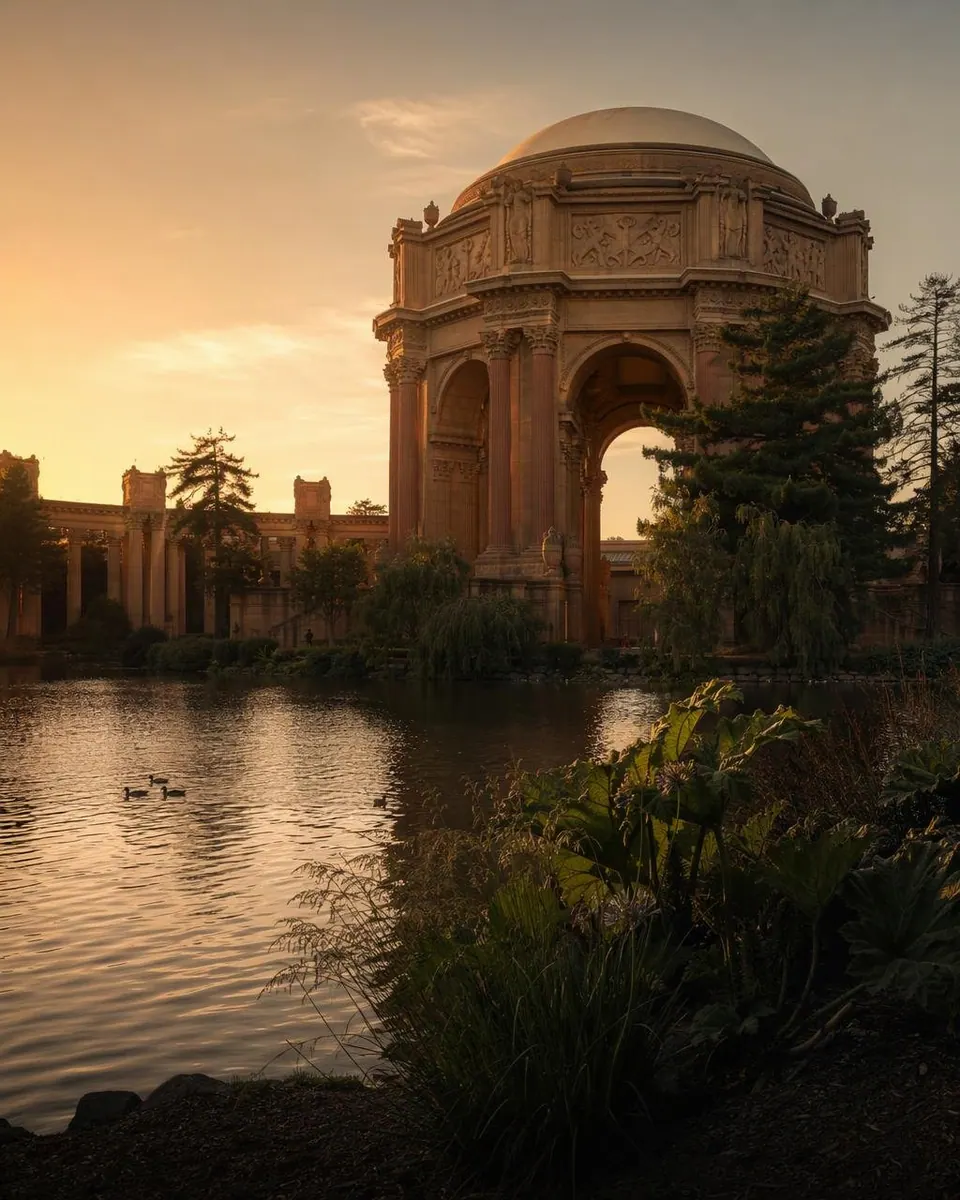
The Palace of Fine Arts rotunda and colonnade glow in golden sunset light beside the lagoon, with ducks on the water and leaves in the foreground.
Hear a moment · 0:23

Walk · 5 stops · 14 min · 460 m · Narrated in English

Palace of Fine Arts: A Roman Ruin Built for One Summer

Walk the lagoon loop and meet a 1915 dream that refused to be torn down.

Stop 1 · The Swamp Nobody Wanted

Now, here's a question. What would you do with the worst spot at a world's fair? That's how this place started out. Willis Polk was the lead architect of the nineteen fifteen Panama-Pacific International Exposition. When he first sized up this patch of ground, he saw a waterlogged bog. In his view, it was the worst site on the whole fairgrounds.

The stops

  1. 1The Swamp Nobody Wanted
  2. 2Reflected as in a Mirror
  3. 3Why Are They Crying?
  4. 4Under the Dome: A Copy of a Dream
  5. 5Built for One Summer

At the first stop, look for Find the historical marker titled 'The Palace Lagoon'. Then look across the water and see the dome and columns doubled in the reflection.

Open in the app
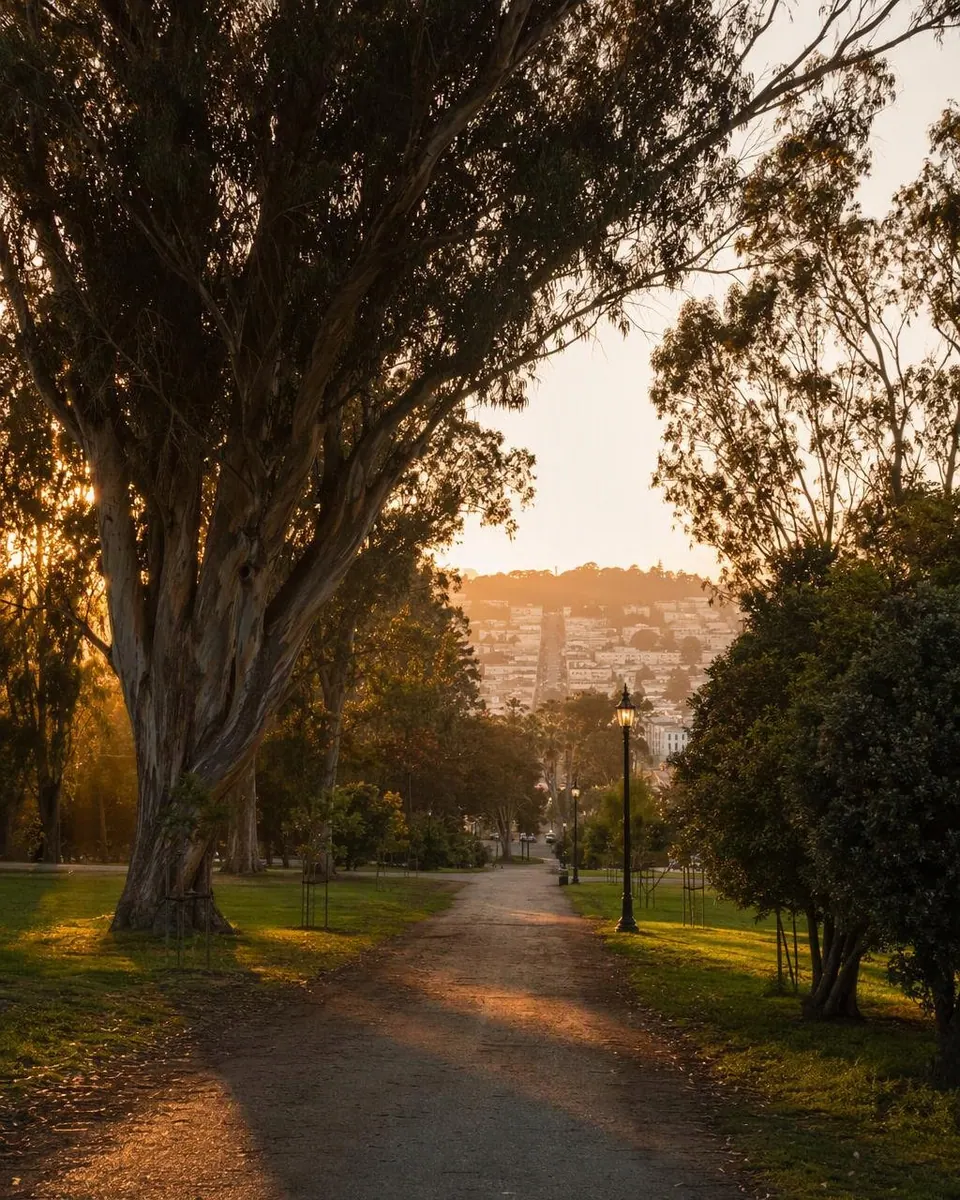
Golden evening light slants across a gravel path in the Panhandle, with eucalyptus trees, a lamppost and San Francisco homes on a distant hill.
Hear a moment · 0:19

Walk · 6 stops · 19 min · 2.3 km · Narrated in English

Panhandle to Hippie Hill

Where the park meets the Haight, and the Summer of Love still hums under the eucalyptus.

Stop 1 · The Panhandle: A Park Shaped by Squatters and Saved by Neighbors

Ever wonder why Golden Gate Park has a handle? It wasn't the plan. The park was meant to be a broad strip reaching all the way to Divisadero Street. But people were already living on the eastern land, with their own claims to it. They would not leave. So the city settled for this skinny ribbon.

The stops

  1. 1The Panhandle: A Park Shaped by Squatters and Saved by Neighbors
  2. 2Alvord Lake Bridge: The Fake Cave That Changed Building
  3. 3The Carousel That Paints Its Own Portrait
  4. 4Hippie Hill: Drums Under the Eucalyptus
  5. 5McLaren Lodge: Home of the Man Who Banned 'Keep Off the Grass'
  6. 6Conservatory of Flowers: The Greenhouse That Sailed Around Cape Horn

At the first stop, look for Towering eucalyptus and other mature trees from around the world. At the western end, look for the grove with a plaque commemorating the 1966 vote against the freeway.

Open in the app
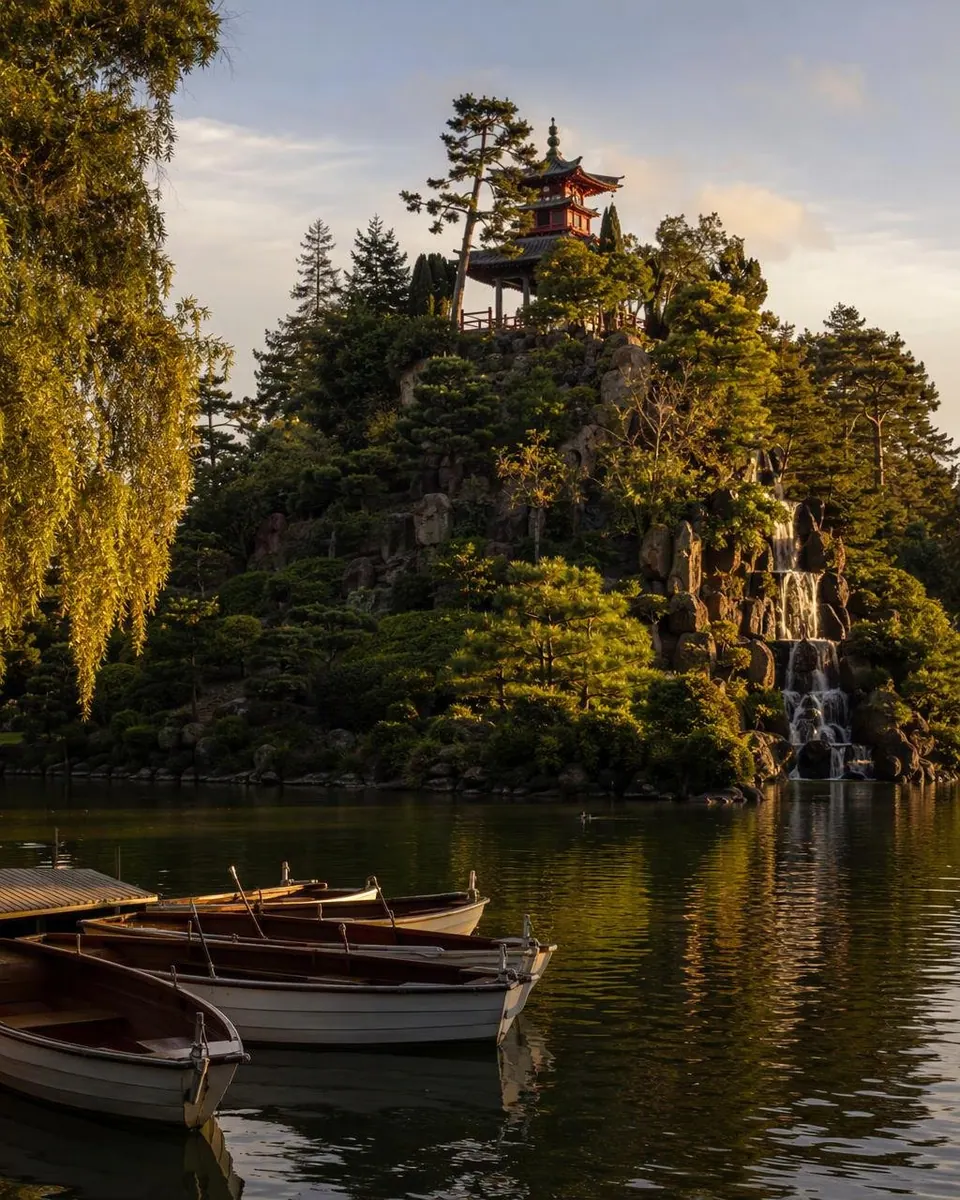
Rowboats moored on Stow Lake in warm evening light, with a red pagoda-style pavilion atop the wooded island hill and a waterfall beside it.
Hear a moment · 0:37

Walk · 6 stops · 19 min · 1.1 km · Narrated in English

Stow Lake and the Island Hill

Row-boats, a gifted pavilion and a man-made waterfall circling an island that pretends to be a mountain.

Stop 1 · The Garden Hagiwara Built

This is generally called the oldest public Japanese garden in the United States. It began in eighteen ninety-four, at the Midwinter Fair. Back then it was the Japanese Village and Tea Garden. An Australian-born man named George Turner Marsh built it with Japanese craftsmen. But the garden you're about to walk into owes the most to someone else. His name was Makoto Hagiwara. When the fair closed, he made the garden permanent. He paid for much of the work himself. He brought plants and birds from Japan, along with the koi you'll see today.

The stops

  1. 1The Garden Hagiwara Built
  2. 2The Cross Hidden in the Trees
  3. 3Boats, a Chalet and a New Name
  4. 4The Waterfall a Railroad Paid For
  5. 5Top of the Watermelon
  6. 6A Gift from Taipei

At the first stop, look for The steep drum bridge and its full-circle reflection. Also look for the five-tiered pagoda that came from the 1915 Panama-Pacific Exposition, the Lantern of Peace, Ruth Asawa's 1974 plaque honoring the Hagiwara family, and the old black pine on its bamboo frame beside the Tea House.

Open in the app
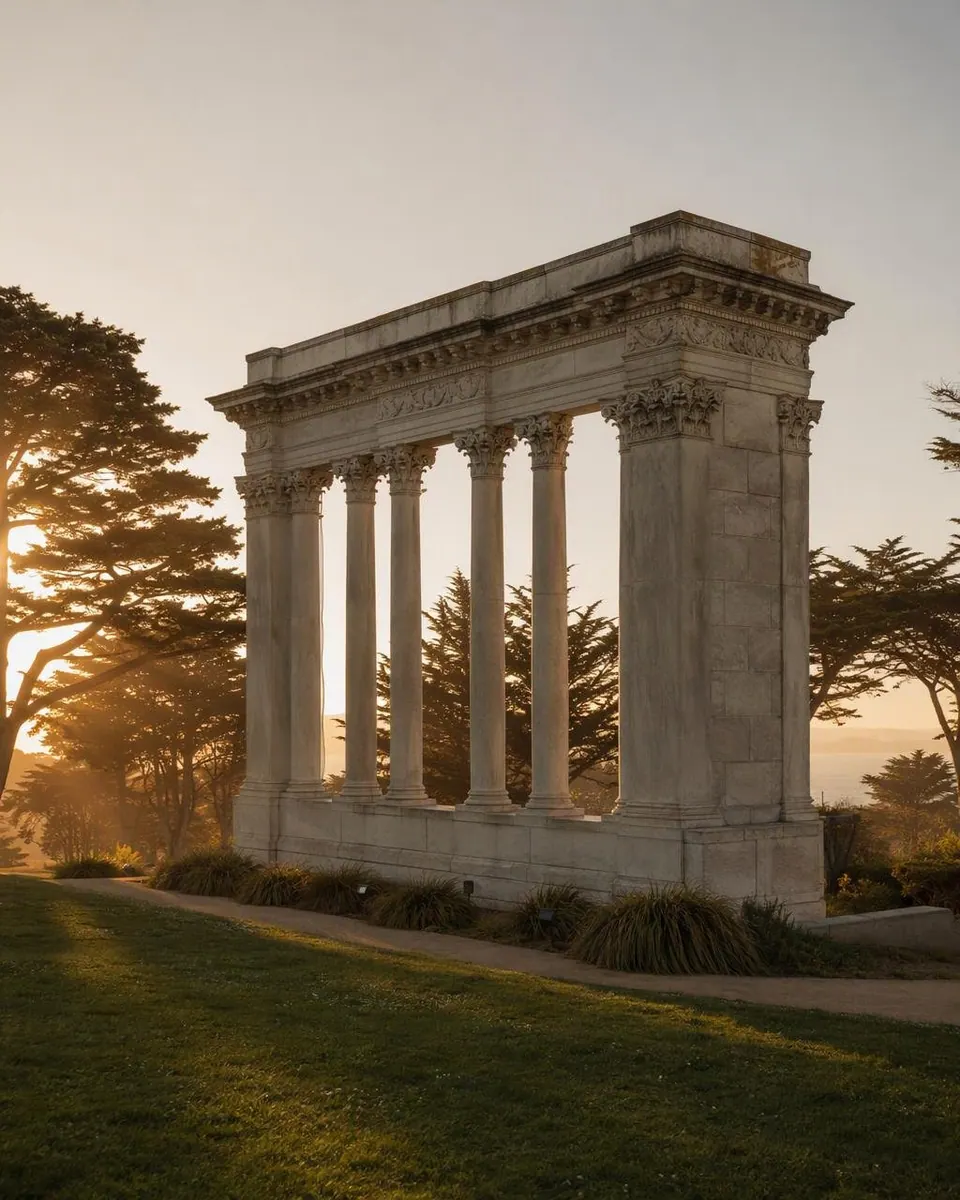
Portals of the Past, a white marble colonnade with carved capitals, stands on a lawn in Golden Gate Park as low sun glows through cypress trees.
Hear a moment · 0:39

Walk · 6 stops · 18 min · 2.1 km · Narrated in English

Bison, Windmills and the Sea

Head west as the trees thin and the wind thickens, until the park simply runs out into the Pacific.

Stop 1 · The Doorway to Nowhere

This was a front porch. A real one, on a real house. It belonged to the mansion of Alban N. Towne. The address was eleven-oh-one California Street, high on Nob Hill. Imagine visitors climbing these steps. They pause between the columns. They reach for the door. Then came nineteen-oh-six. The earthquake struck, and fire followed it through the city. The Towne mansion was destroyed. But the porch survived. Only the porch and its six marble columns were left standing. It was a doorway with no house behind it. A doorway to nowhere.

The stops

  1. 1The Doorway to Nowhere
  2. 2A Lake for Toy Ships
  3. 3Bison in the City
  4. 4Old Dutch and the Windmill Lady
  5. 5A City Painted on Four Walls
  6. 6The South Giant

At the first stop, look for The six marble columns and their reflection in Lloyd Lake. Picture them on a hilltop above a burning city.

Open in the app